
Distress Thermometer
This tool helps providers assess a patient’s distress level.
Distress Thermometer Read More
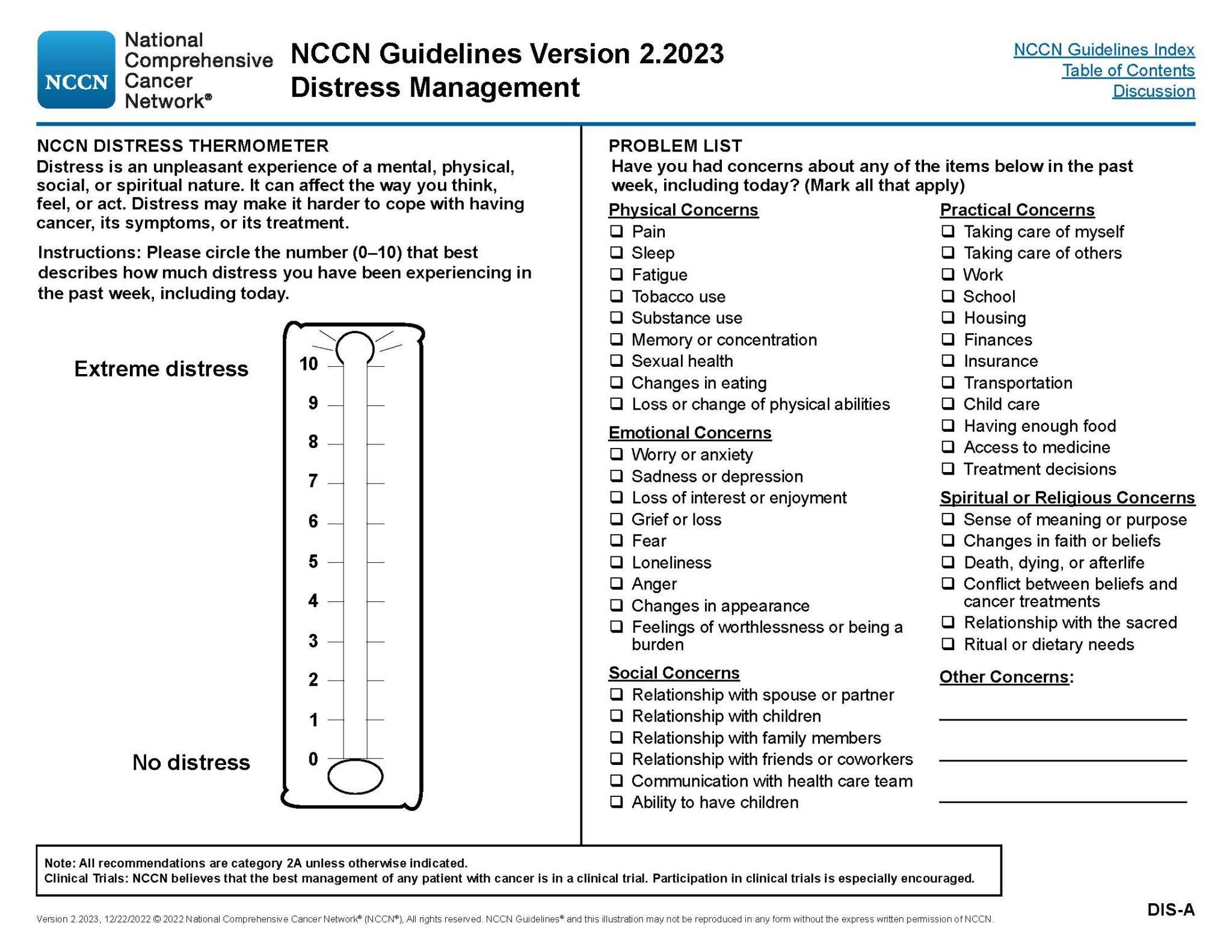
This tool helps providers assess a patient’s distress level.
Distress Thermometer Read More

Everyone with cancer has distress at some point in time. Distress is normal. This booklet is a guide to understanding distress and where you can go for help when you
Distress During Cancer Care Read More

This booklet will explain the why, what, how, and when of physical activity during and after cancer treatment.
Moving through Cancer | A Guide to Getting and Staying Active During Cancer Treatment Read More

Health care providers can play a critical role in helping to reduce the incidence of hereditary breast and ovarian cancer by identifying patients with elevated risk. These guidelines can help

The American Cancer Society (ACS) recommends that men have a chance to make an informed decision with their health care provider about whether to be screened for prostate cancer. Learn
American Cancer Society Recommendations for Prostate Cancer Early Detection Read More

The USPSTF recommends annual screening for lung cancer with low-dose computed tomography (LDCT) in adults aged 50 to 80 years who have a 20 pack-year smoking history and currently smoke
Lung Cancer Screening Guidelines (USPSTF) Read More
Compare breast cancer screening guidelines from the U.S. Preventive Services Task Force, American Cancer Society, American College of Obstetricians and Gynecologists and four other organizations.
Breast Cancer Screening Guidelines for Women Chart Read More