
Distress Thermometer
This tool helps providers assess a patient’s distress level.
Distress Thermometer Read More
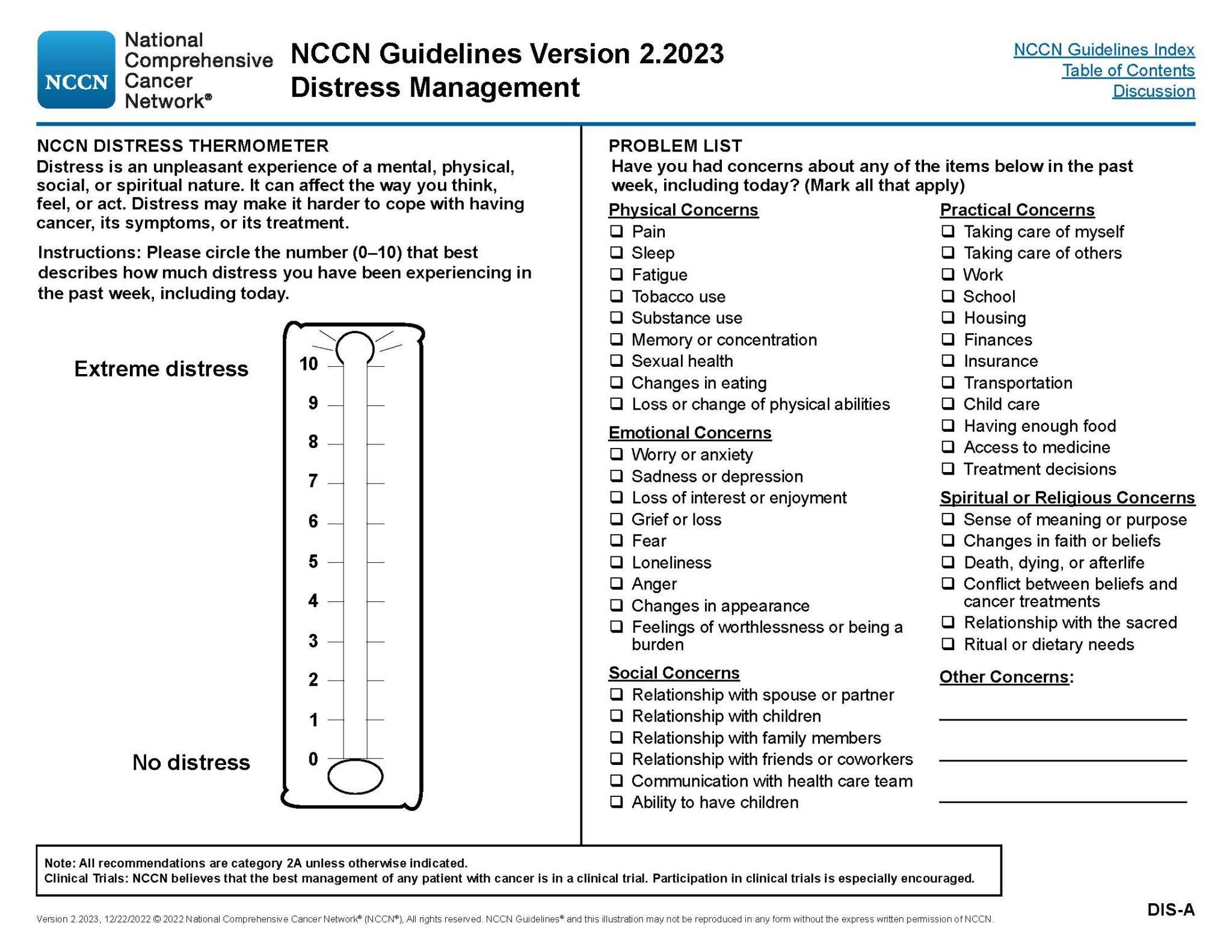
This tool helps providers assess a patient’s distress level.
Distress Thermometer Read More

Everyone with cancer has distress at some point in time. Distress is normal. This booklet is a guide to understanding distress and where you can go for help when you
Distress During Cancer Care Read More

This booklet will explain the why, what, how, and when of physical activity during and after cancer treatment.
Moving through Cancer | A Guide to Getting and Staying Active During Cancer Treatment Read More

The Advancing Patient-Centered Cancer Survivorship Care Toolkit supports training and technical assistance to improve patient-centered cancer survivorship care.
Advancing Patient-Centered Cancer Survivorship Care Toolkit Read More
This resource offers help with implementing the American Cancer Society cancer survivorship care guidelines for colorectal, head and neck and prostate cancers and the American Cancer Society/American Society of Clinical
National Cancer Survivorship Resource Center Tools Read More

Learn about tools that health care providers can use to conduct distress screening with cancer survivors from Dr. Natasha Buchanan Lunsford, a clinical health psychologist in CDC’s Division of Cancer
Patient-Provider Communication: Improving the Mental Health of Cancer Survivors (Video) Read More

This is a web-based application designed to enhance knowledge and increase patient participation in the decision-making process for prostate cancer screening.
A Web-based Decision Aid for Prostate Cancer Screening Read More
Leading Cancer Cases and Deaths, All Races and Ethnicities, Male and Female, 2019, can be searched on this page.
North Dakota Lung Cancer Statistics Read More
Access the statewide programs recommended by the CDC that combine and coordinate community-based interventions.
Lung Cancer Evidence-Based Strategies Read More

Find featured lung cancer videos, downloadable worksheets, interactive tools, data and more.
Lung Cancer Resource Library Read More
The National Lung Screening Trial (NLST) provided the first solid evidence that screening with LDCT can reduce lung cancer mortality risk in ever-smokers who have smoked 30 pack-years or longer
Lung Cancer PDQ for Health Professionals Read More
People are living longer after a cancer diagnosis because of advances in early detection and treatment. Medical and public health professionals can help prepare survivors for the possible long-term and
Caring for Cancer Survivors Read More
Review prostate prevention, screening, treatment, and genetics information.
Prostate Cancer – Health Professional Version Read More

Lung cancer incidence, treatment and screening rates can be found here.
North Dakota Lung Cancer Statistics (2020) Read More
The USPSTF recommends annual screening for lung cancer with low-dose computed tomography (LDCT) in adults aged 50 to 80 years who have a 20 pack-year smoking history and currently smoke
Lung Cancer Screening Guidelines (USPSTF) Read More