End Colon Cancer in Indian Country
Colorectal cancer is the second most common cancer among Native people, and the second leading cause of cancer death. Learn more.
End Colon Cancer in Indian Country Read More

Colorectal cancer is the second most common cancer among Native people, and the second leading cause of cancer death. Learn more.
End Colon Cancer in Indian Country Read More
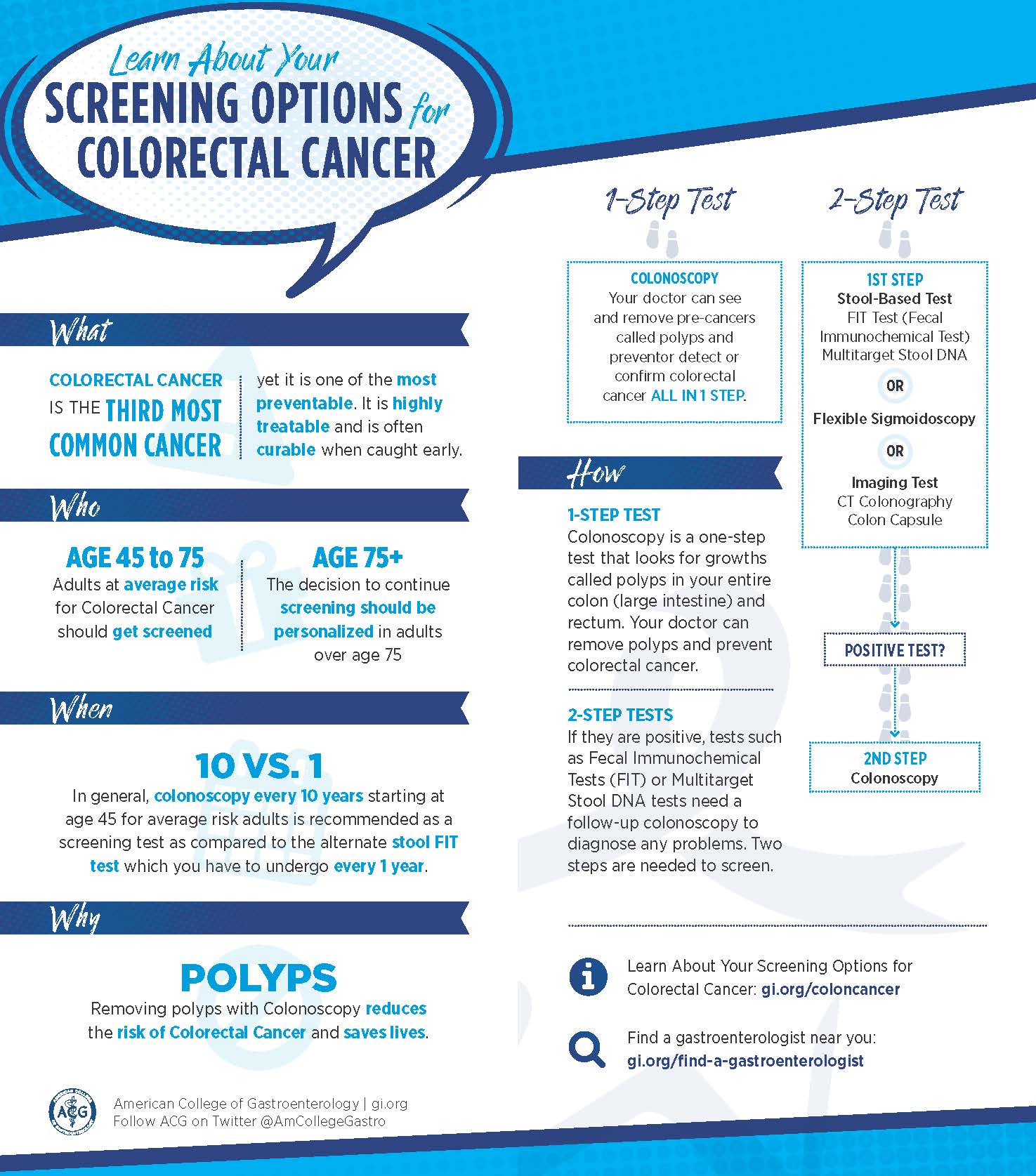
Know all of the options available for colorectal cancer screening.
Learn About Your Screening Options Read More
Primary care plays a central role in cancer screening. This practical toolkit helps primary care providers improve cancer screening rates in their practices and reduce related disparities, based on research
Improving Cancer Screening Rates in Your Practice and Reducing Related Disparities Read More
This document provides an action-oriented playbook for how NCCRT members, 80% pledged partners, and colorectal cancer screening advocates across the nation can work together to reignite our screening efforts appropriately,
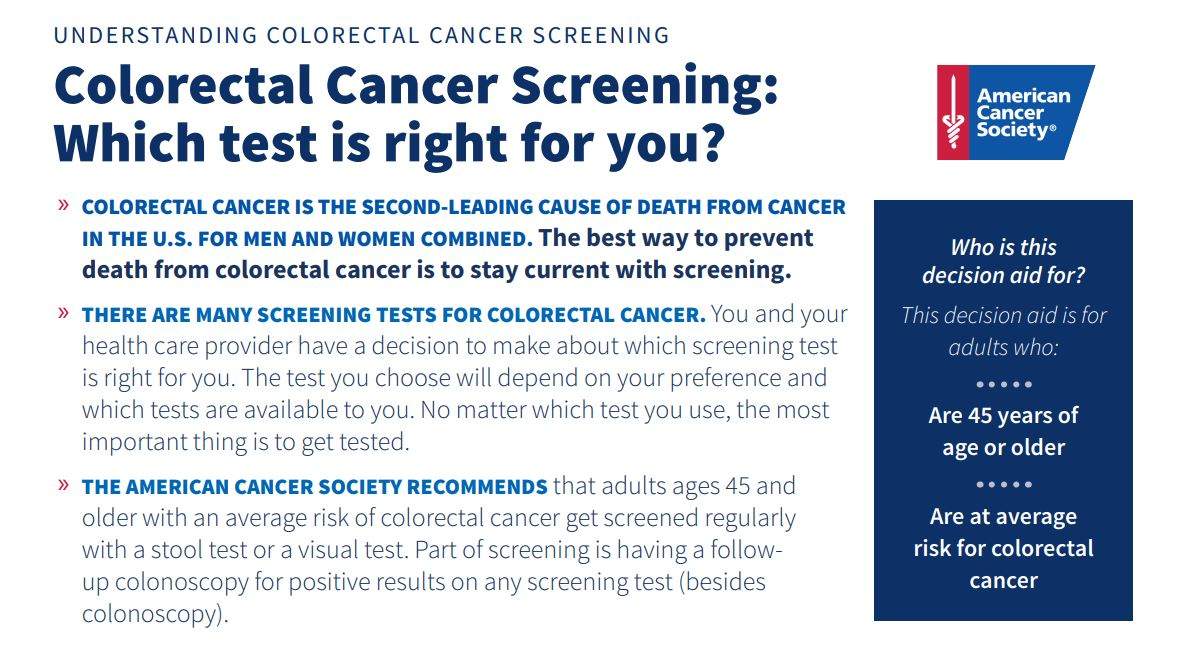
The ACS recommends that people at average risk of colorectal cancer start regular screening at age 45. This can be done either with a sensitive test that looks for signs
American Cancer Society Guideline for Colorectal Cancer Screening Read More

Free brochures, fact sheets, and other educational materials from the Centers for Disease Control and Prevention (CDC).
Right to Know Campaign Read More

Health care providers can play a critical role in helping to reduce the incidence of hereditary breast and ovarian cancer by identifying patients with elevated risk. These guidelines can help

A woman’s lifetime risk of developing breast and/or ovarian cancer is markedly increased if she inherits a harmful variant in BRCA1 or BRCA2. Learn more about risks and testing.
BRCA Gene Mutations: Cancer Risk and Genetic Testing Read More
The Breast Cancer Risk Assessment Tool allows health professionals to estimate a woman’s risk of developing invasive breast cancer over the next 5 years and up to age 90 (lifetime risk).
Breast Cancer Risk Assessment Tool Read More
Learn more about risk factors and symptoms of breast cancer.
Breast Cancer Risk Factors and Symptoms Read More
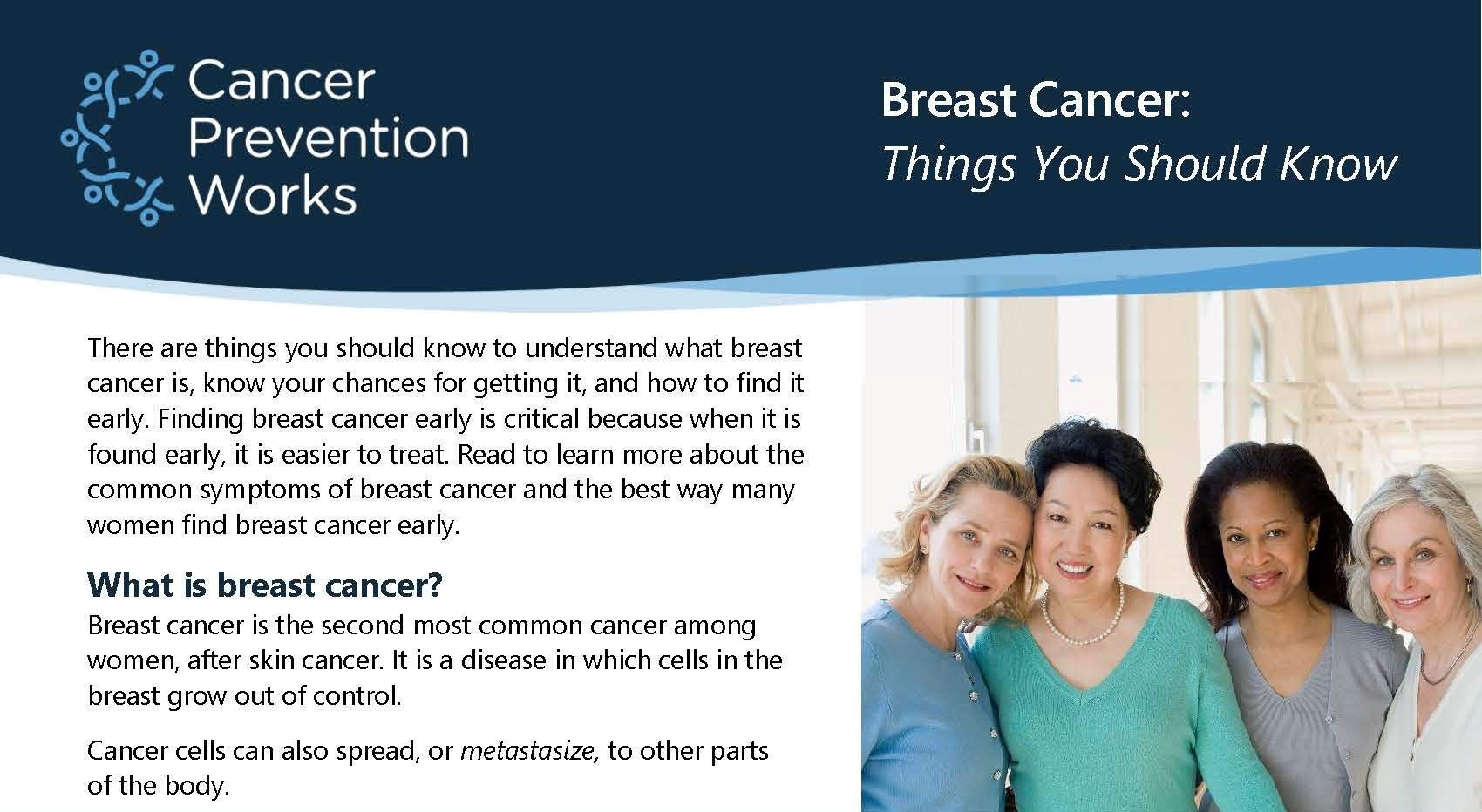
There are things you should know to understand what breast cancer is, know your chances for getting it, and how to find it early.
Breast Cancer: Things You Should Know Read More

Talk with your doctor about when and how often to get mammograms.
Get Tested for Breast Cancer Read More
Lung cancer incidence, treatment and screening rates can be found here.
North Dakota Lung Cancer Statistics (2020) Read More
The USPSTF recommends annual screening for lung cancer with low-dose computed tomography (LDCT) in adults aged 50 to 80 years who have a 20 pack-year smoking history and currently smoke
Lung Cancer Screening Guidelines (USPSTF) Read More
There are different types of lung cancer. Knowing which type you have is important because it affects your treatment options and your outlook (prognosis). If you aren’t sure which type
Use these messages to spread awareness about lung cancer, share lung cancer facts and advancements, and spread the hope of a better tomorrow.
Take Action on Social Media Toolkit Read More
80% in Every Community is an NCCRT initiative that continues the progress and commitment from 80% by 2018, and reemphasizes dedication to partnership, collective action, and the pooling of resources
80% in Every Community Read More
Screening for colorectal cancer should begin at age 45. Learn more!
Colorectal Cancer Factsheet Read More
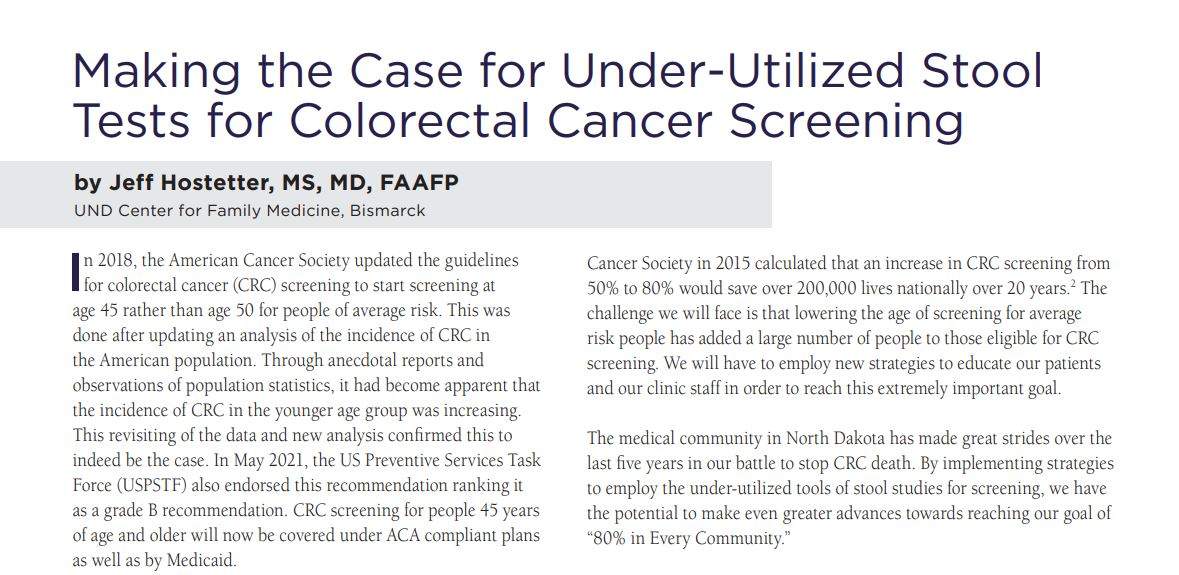
Guidelines from the American Cancer Society, the US Preventive Services Task Force, and others recommend Fecal Immunochemical Tests (FIT), High-Sensitivity Fecal Occult Blood Tests (HS-gFOBT) and FIT-DNA testing as options
Clinician’s Reference: Stool-Based Tests for Colorectal Cancer Screening Read More

The Bring Your Brave campaign provides information about breast cancer to women younger than age 45 by sharing real stories about young women whose lives have been affected by breast
Bring Your Brave Campaign Read More
Compare breast cancer screening guidelines from the U.S. Preventive Services Task Force, American Cancer Society, American College of Obstetricians and Gynecologists and four other organizations.
Breast Cancer Screening Guidelines for Women Chart Read More
Visiting the doctor can be stressful. It helps to have questions for the doctor written down ahead of time.
Mammograms: Questions for the Doctor Read More