
Basic Information About Lung Cancer
Lung cancer is the leading cause of cancer death. Learn the risk factors and how you can prevent lung cancer.
Basic Information About Lung Cancer Read More
Lung cancer is the leading cause of cancer death. Learn the risk factors and how you can prevent lung cancer.
Basic Information About Lung Cancer Read More
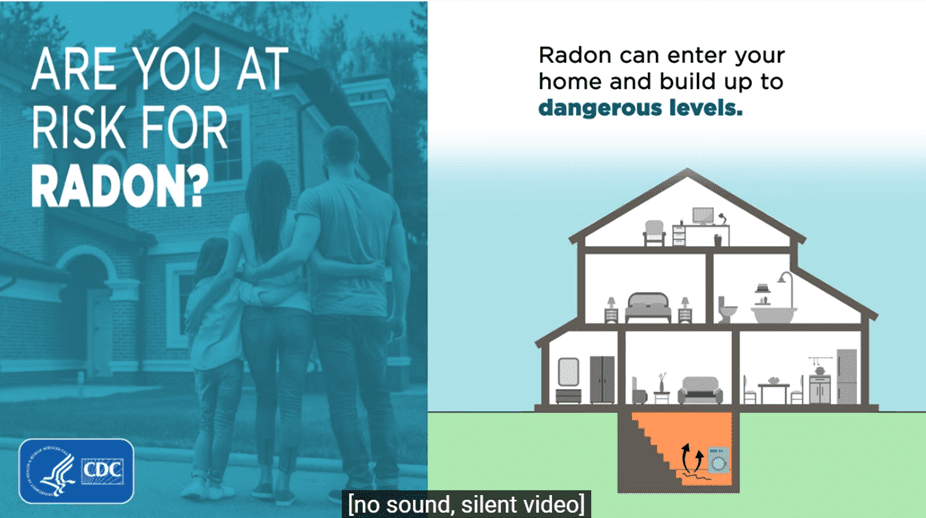
Learn the risks of radon in your home.
Are You At Risk for Radon (Video) Read More

The videos in this collection explain colon cancer risk factors, screening tests, treatments, and more.

Colorectal cancer is the second most common cancer among Native people, and the second leading cause of cancer death. Learn more.
End Colon Cancer in Indian Country Read More
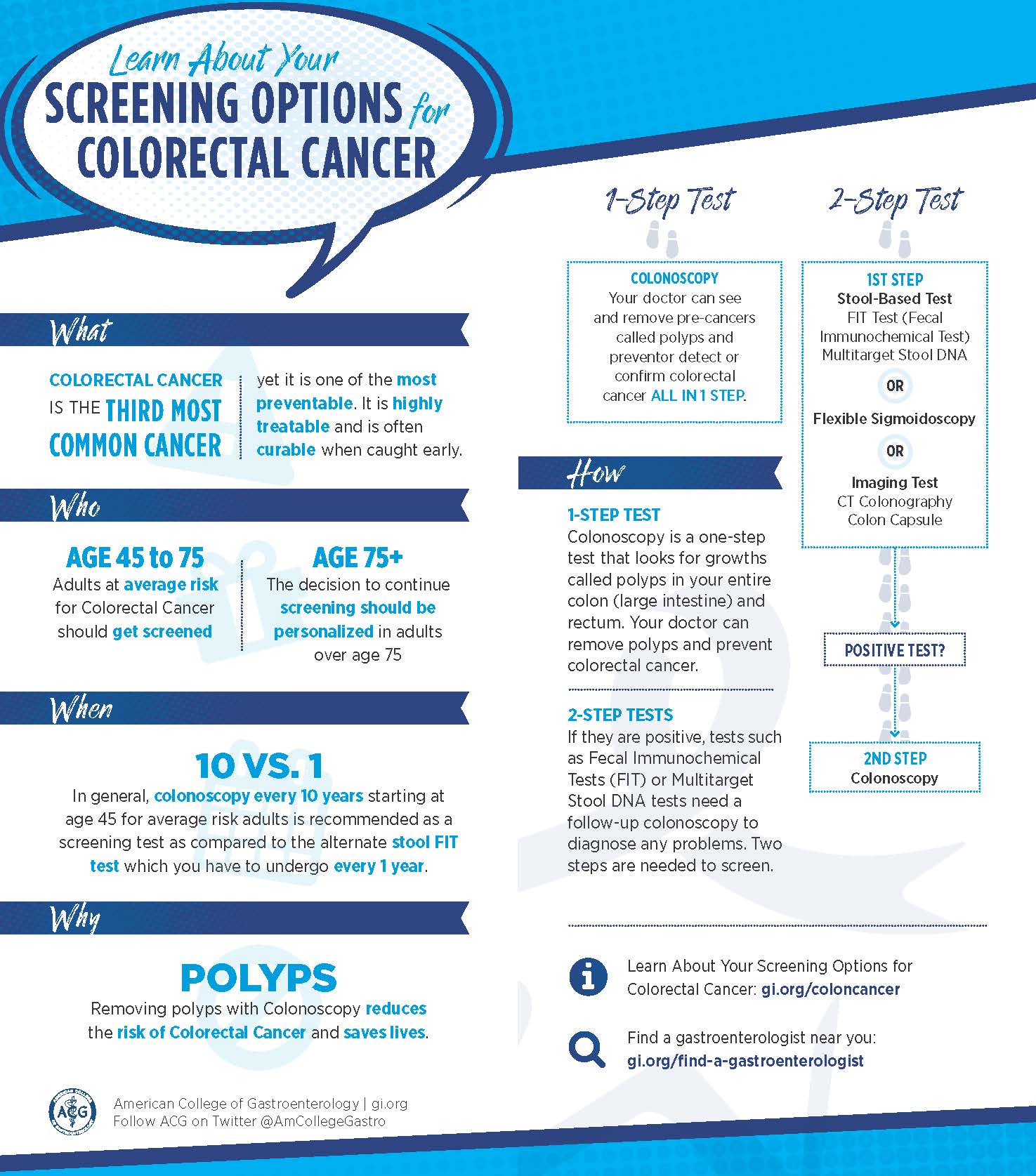
Know all of the options available for colorectal cancer screening.
Learn About Your Screening Options Read More
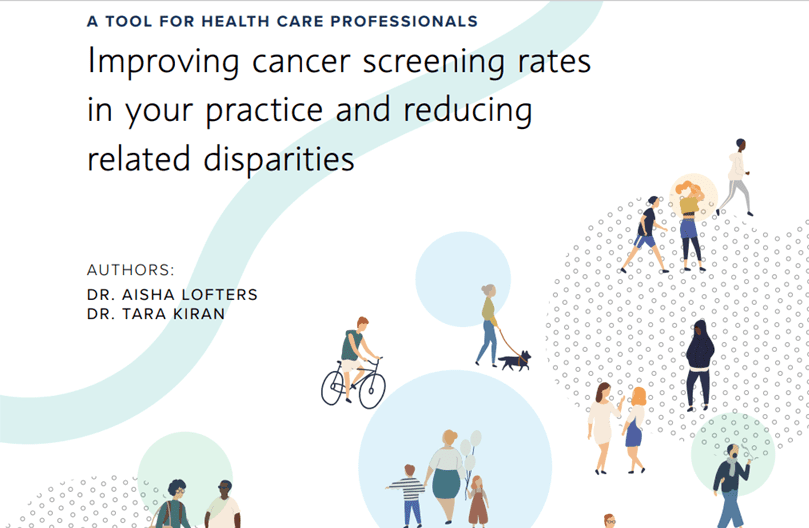
Primary care plays a central role in cancer screening. This practical toolkit helps primary care providers improve cancer screening rates in their practices and reduce related disparities, based on research
Improving Cancer Screening Rates in Your Practice and Reducing Related Disparities Read More
This document provides an action-oriented playbook for how NCCRT members, 80% pledged partners, and colorectal cancer screening advocates across the nation can work together to reignite our screening efforts appropriately,
The ACS recommends that people at average risk of colorectal cancer start regular screening at age 45. This can be done either with a sensitive test that looks for signs
American Cancer Society Guideline for Colorectal Cancer Screening Read More
Review this generous list of cervical cancer survivor stories from the American Cancer Society.
Parents may be interested in vaccinating, yet still have questions. Taking the time to listen to parents’ questions helps you save time and give an effective response. CDC research shows
Tips and Time-savers for Talking with Parents about HPV Vaccine Read More
Women from across the country have shared their personal survivor stories. Read their first-hand accounts to learn important lessons.
Cervical Cancer Survivor Stories Read More

Learn about cervical cancer prevention, detection, and treatment from the National Cancer Institute.
Cervical Cancer PDQ – Patient Version Read More
Learn about cervical cancer from A-Z from the American Cancer Society.
Cervical Cancer Overview Read More
This fact sheet about cervical cancer is part of the Centers for Disease Control and Prevention’s (CDC) Inside Knowledge: About Gynecologic Cancer campaign. The campaign helps women get the facts
Cervical Cancer Fact Sheet Read More
The American Cancer Society recommends that women follow recommended guidelines to help find cervical cancer early as well as pre-cancers, which can be treated to keep cervical cancer from starting.

Free brochures, fact sheets, and other educational materials from the Centers for Disease Control and Prevention (CDC).
Right to Know Campaign Read More

Health care providers can play a critical role in helping to reduce the incidence of hereditary breast and ovarian cancer by identifying patients with elevated risk. These guidelines can help
A woman’s lifetime risk of developing breast and/or ovarian cancer is markedly increased if she inherits a harmful variant in BRCA1 or BRCA2. Learn more about risks and testing.
BRCA Gene Mutations: Cancer Risk and Genetic Testing Read More
The Breast Cancer Risk Assessment Tool allows health professionals to estimate a woman’s risk of developing invasive breast cancer over the next 5 years and up to age 90 (lifetime risk).
Breast Cancer Risk Assessment Tool Read More

Learn more about risk factors and symptoms of breast cancer.
Breast Cancer Risk Factors and Symptoms Read More
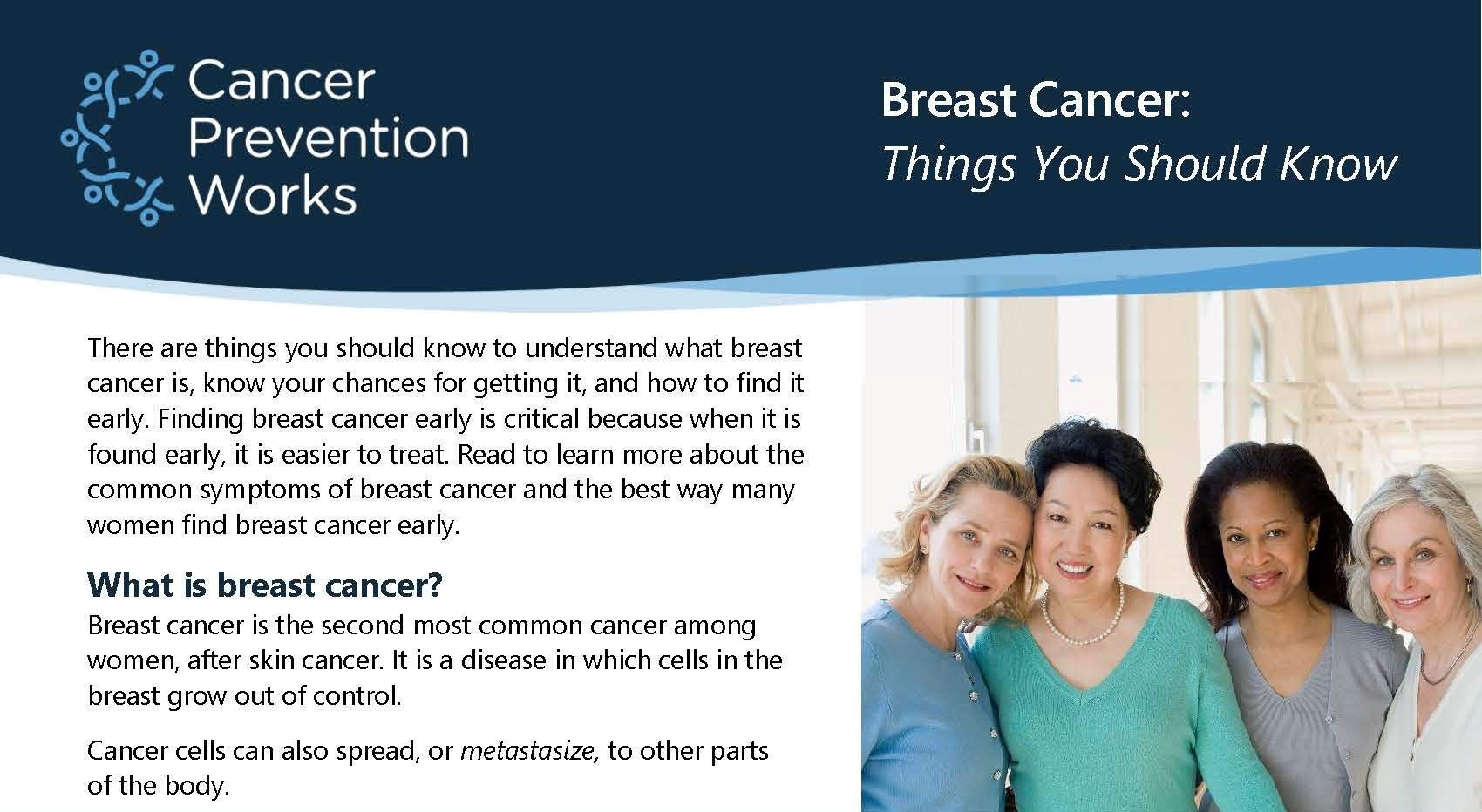
There are things you should know to understand what breast cancer is, know your chances for getting it, and how to find it early.
Breast Cancer: Things You Should Know Read More

Talk with your doctor about when and how often to get mammograms.
Get Tested for Breast Cancer Read More
Hear how Wenora, Mark, Xenia, and Ana María approach life after cancer and find their new normal.
Stories of Life After Cancer Read More
People are living longer after a cancer diagnosis because of advances in early detection and treatment. Medical and public health professionals can help prepare survivors for the possible long-term and
Caring for Cancer Survivors Read More
Today, there are more than 16.9 million Americans alive with a history of cancer. This site’s survivorship section provides helpful information for cancer survivors and their friends and family.
What is Survivorship? Read More
Review prostate prevention, screening, treatment, and genetics information.
Prostate Cancer – Health Professional Version Read More